



Adjustable beds have carried a specific image for a long time. Most people picture them in aged care facilities or in a grandparent's bedroom after surgery. That picture is outdated. More adjustable beds Perth families are buying today are ending up in homes with young couples, pregnant women, and people in their thirties managing chronic back pain. The reasons are worth knowing.
Why Has the Perception Shifted?
The adjustable bed market has changed considerably. Modern electric bases are sleeker, quieter, and far more feature-rich than older models. They fit standard bed frames, work with a range of mattresses, and pair with wireless remotes or app controls. They no longer look or feel clinical, and that shift in design has opened the product up to a much wider group of buyers.
Health conditions that benefit from positional sleeping are also not exclusive to older Australians. Acid reflux, pregnancy discomfort, post-surgery recovery, and chronic lower back pain affect people of all ages. Each of these responds well to sleeping at an elevated angle or with the legs raised.
What Health Conditions Respond Well to Positional Sleeping?
Sleeping flat is not a neutral position. For some conditions, it makes symptoms worse overnight. An adjustable base lets people fine-tune their sleeping position to reduce pressure and discomfort. Four conditions where head or leg elevation consistently helps include:
Acid reflux and GORD. Elevating the head of the bed reduces nighttime reflux symptoms. Stomach acid is less likely to travel upward when the upper body is raised, making this a well-supported management strategy.
Pregnancy. Sleeping flat in the third trimester puts pressure on the vena cava, reducing blood flow. Slight leg elevation reduces this pressure and improves circulation and comfort through the night.
Post-surgery recovery. Elevating a limb or the upper body reduces swelling and fluid pooling after surgery. Hospitals use adjustable positioning for exactly this reason.
Chronic back pain. Raising both the head and foot of the bed reduces pressure on the lumbar spine. The semi-reclined or zero-gravity position takes significant load off the lower back.
How Are Perth Families Using Them Day to Day?
Beyond the health side, adjustable bases have become a genuine lifestyle product. Couples use the split-base option so each person sets their own position without disturbing the other. Parents who spend time reading or watching TV in bed use the raised head position to avoid neck strain. People who work from home and take calls from bed find the upright incline genuinely useful.
The electric adjustable beds available today often include massage functions, USB charging ports, and under-bed lighting. These aren't clinical add-ons. They're features that suit a busy household.
Zero-disturbance sleep is another practical consideration. A split adjustable base means one partner can sit upright reading while the other lies flat. For couples with different sleep schedules or preferences, this solves a real problem.
What Type of Mattress Works With an Adjustable Base?
Not every mattress bends well. Rigid innerspring mattresses don't flex properly with an adjustable base, and forcing them to can damage the coils over time. The best options are memory foam, latex, or flexible pocket spring mattresses built specifically for adjustable use.
Mattress compatibility is one of the most common questions buyers raise. A mattress that is too firm or too thick won't contour to the base's movement. Most manufacturers specify whether their mattress is adjustable bed compatible, so it's worth confirming before buying both together.
What Should Perth Buyers Consider Before Purchasing?
Buying an adjustable base involves a few practical decisions. These are the main points worth working through before committing:
Single vs. dual motor. A single motor base raises the head and foot together on one mechanism. A dual motor operates each end independently for more precise positioning.
Split vs. standard. A split base suits couples with different sleep preferences. A standard base works well for solo sleepers or those who want a unified position.
Weight capacity. Adjustable bases have rated weight limits. Confirm the base suits the combined weight of the mattress and sleeper.
Warranty and servicing. Motors and mechanisms need coverage. A 10-year warranty is a reasonable benchmark for a quality base.
For anyone managing a health condition, speaking with a GP or physiotherapist before deciding on positioning specifics is worthwhile. They can advise on the right elevation angles for your situation.
Adjustable beds are no longer a niche product for one demographic. Perth families dealing with reflux, back problems, pregnancy, or simply wanting better rest are finding real value in them. To explore options in person, visit Bedworld at bedworldonline.com.au.
Perth Families Are Choosing Adjustable Beds for More Than Just the Elderly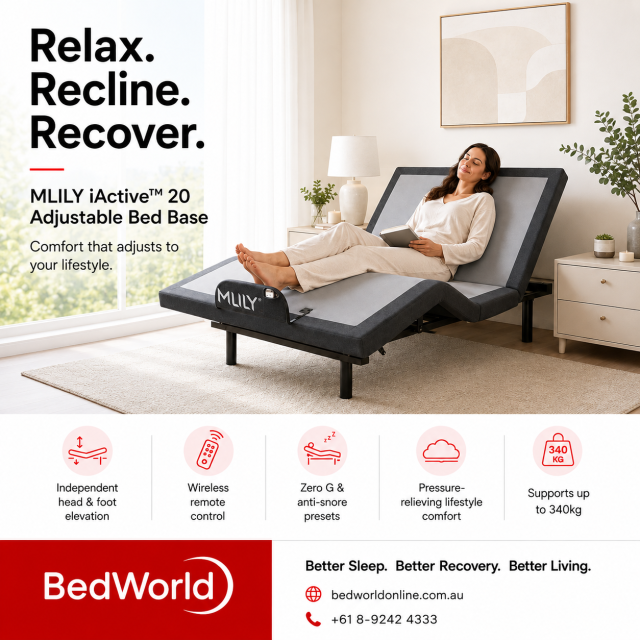 
Visit my Business Website
Welcome Visitor 20
To distribute this article more widely To manage this article or write your own article simply LOGIN
| ||||||
